Tel:+ +8613588244516
 Email:
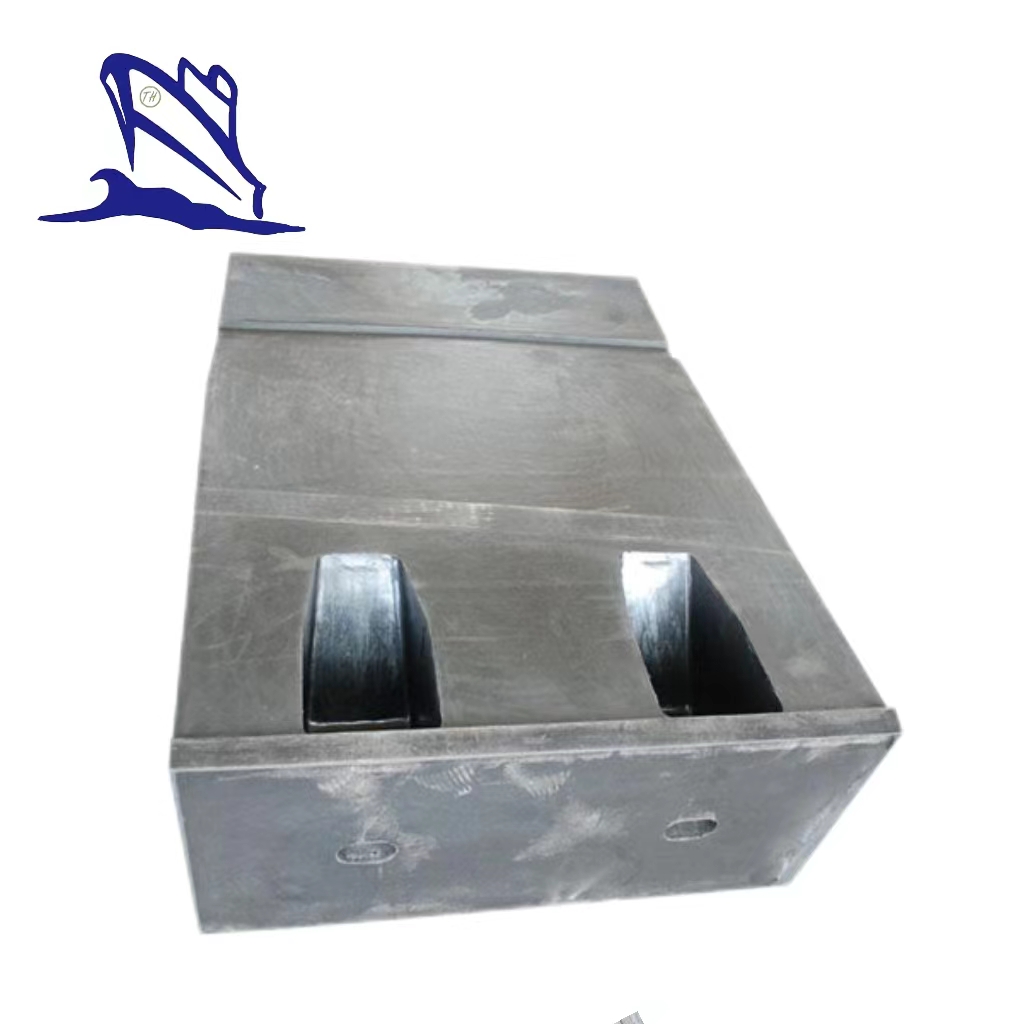
Unit Element Rubber Fender
Description:
A unit element rubber fender is a type of protective device commonly used in maritime applications to absorb and distribute the energy generated during ship-to-ship or ship-to-dock collisions. It is specifically designed to minimize damage to both the vessel and the docking structure.
The fender is composed of multiple individual rubber elements arranged in a modular fashion, forming a continuous line along the docking area. Each unit element consists of a durable rubber body with a hollow cylindrical or rectangular shape, typically reinforced with layers of synthetic cords or steel wires for added strength and stability.
The unit elements are securely attached to the docking structure using bolts, chains, or other fastening mechanisms. Their arrangement allows for flexibility and deformation when subjected to external forces, such as impact from a ship. The rubber material used in the fender construction possesses high elasticity and resilience, enabling it to effectively absorb and dissipate the kinetic energy generated during collisions.
The design of unit element rubber fenders provides several advantages. Firstly, their modular nature allows for easy installation, replacement, and maintenance. In case of damage to a particular unit, it can be individually replaced without requiring the entire fender system to be dismantled. This feature also enables customization of the fender length to suit specific docking requirements.
Additionally, the rubber material used in these fenders offers resistance to corrosion, UV radiation, and harsh marine environments, ensuring durability and a longer service life. The fenders are designed to withstand repetitive impacts, reducing the risk of structural failure and ensuring the continued safety of vessels and docking infrastructure.
Unit element rubber fenders come in various sizes, shapes, and load-bearing capacities to accommodate different types of vessels and docking scenarios. Their installation is commonly found in ports, harbors, docks, and other marine facilities where protection against ship collisions is essential.

| ecification | H (mm) | A (mm) | B (mm) | C (mm) | Weight (kg) | |
| ME 300H | 300 | 94 | 94 | 47 | 44 | |
| ME 400H | 400 | 125 | 124 | 63 | 72 | |
| ME 500H | 500 | 158 | 142 | 87 | 11 | |
| ME 550H | 550 | 172 | 170 | 87 | 128 | |
| ME 600H | 600 | 188 | 199 | 87 | 149 | |
| ME 750H | 750 | 235 | 230 | 118 | 239 | |
| ME 800H | 800 | 250 | 240 | 129 | 266 | |
| ME 1000H | 1000 | 322 | 310 | 162 | 430 | |
| ME 1250H | 1250 | 451 | 388 | 202 | 627 | |
| ME 1400H | 1400 | 454 | 454 | 228 | 888 | |
| ME 1600H | 1600 | 500 | 480 | 257 | 1018 | |
The specifications are just for your reference, please contact us to customize the size you need.
Energy Absorption and Reaction Force Performance of Unit Element Rubber Fender:
| Specification | High Reaction Force | Standard Reaction Force | Tolerance(%) | |||||||
| Reaction Force (KN) | Energy Absorb (KN-M) | Reaction Force (KN) | Energy Absorb (KN-M) | |||||||
| ME 300H | 160 | 22 | 110 | 15 | ±10% | |||||
| ME 400H | 210 | 39 | 150 | 27 | ||||||
| ME 500H | 265 | 61 | 187 | 43 | ||||||
| ME 550H | 294 | 75 | 206 | 52 | ||||||
| ME 600H | 320 | 89 | 224 | 62 | ||||||
| ME 750H | 400 | 137 | 282 | 96 | ||||||
| ME 800H | 428 | 157 | 299 | 110 | ||||||
| ME 1000H | 535 | 245 | 374 | 172 | ||||||
| ME 1250H | 668 | 383 | 467 | 268 | ||||||
| ME 1400H | 775 | 516 | 543 | 361 | ||||||
| ME 1600H | 855 | 628 | 599 | 440 | ||||||